
Access and download collection of free Templates to help power your productivity and performance.
His principal point was that in business you keep score with dollars, and the scorecard is a financial statement. He recognized that „a lot of people don’t understand keeping score in business. They get mixed up about profits, assets, cash flow, and return on investment.“ Footnotes also depend heavily on the accounting framework that is being followed for the specific company. For example, the financial statement footnotes will look different for a company that follows IFRS standards compared to US GAAP. Publicly held companies will require even more extensive financial statements and footnotes mandated by authorities like the Securities and Exchange Commission (SEC) in the United States. On the other hand, it is financial records prepared and issued by the company as a part of the financial reporting requirements.
Assets
Operating revenue is generated from the core business activities of a company. Often, the footnotes will be used to explain how a particular value was assessed on a specific line item. This can include issues such as depreciation or any incident where an estimate of future financial outcomes had to be determined. Importantly, a company will state notes to financial statements the accounting methodology used, if it has changed in any meaningful way from past practice, and whether any items should be interpreted in any way other than what is conventional. For example, footnotes will explain how a company calculated its earnings per share (EPS), how it counted diluted shares, and how it counted shares outstanding.
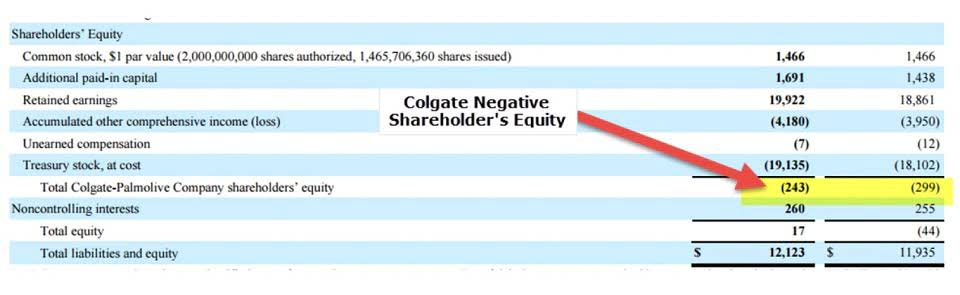
An often less utilized financial statement, a statement of comprehensive income summarizes standard net income while also incorporating changes in other comprehensive income (OCI). Other comprehensive income includes all unrealized gains and losses that are not reported on the income statement. This financial statement shows a company’s total change in income, even gains and losses that have yet to be recorded in accordance to accounting rules. The balance sheet provides an overview of a company’s assets, liabilities, and shareholders‘ equity as a snapshot in time. The date at the top of the balance sheet tells you when the snapshot was taken, which is generally the end of the reporting period. This is done mainly for the sake of clarity because these notes can be quite long, and if they were included in the main text they would cloud the data reported in the financial statement.
2024–25 FAFSA Soft Launch Details and Timelines (Updated Dec. 31,
For-profit primary financial statements include the balance sheet, income statement, statement of cash flow, and statement of changes in equity. Financial statements provide investors with information about a company’s financial position, helping to ensure corporate transparency and accountability. Understanding how to interpret key financial reports, such as a balance sheet and cash flow statement, helps investors assess a company’s financial health before making an investment. Investors can also use information disclosed in the financial statements to calculate ratios for making comparisons against previous periods and competitors. The financial statements used in investment analysis are the balance sheet, the income statement, and the cash flow statement with additional analysis of a company’s shareholders‘ equity and retained earnings.
Over 1.8 million professionals use CFI to learn accounting, financial analysis, modeling and more. Start with a free account to explore 20+ always-free courses and hundreds of finance templates and cheat sheets. Ask a question about your financial situation providing as much detail as possible. We follow strict ethical journalism practices, which includes presenting unbiased information and citing reliable, attributed resources.
What Are the Benefits of Financial Statements?
Companies use CFF to assess their operations‘ ability to finance and make decisions about issuing new equity and debt financing. Selling, general, and administrative (SG&A) expenses, in other words, all non-production costs, are usually lumped together with operating expenses. Some companies also choose to put this as a separate line item from operating expenses. Gross profit is the difference between a company’s revenue (net sales) and the cost of goods sold. It reflects the efficiency of a company in its production and selling process.
For example, comparative income statements report what a company’s income was last year and what a company’s income is this year. Noting the year-over-year change informs users of the financial statements of a company’s health. These provide additional information pertaining to a company’s operations and financial position and are considered to be an integral part of the financial statements. Footnotes to the financial statements refer to additional information that helps explain how a company arrived at its financial statement figures.